Is it worth considering Aboriginal People in environmental planning?
- Dominic Tang
- Jun 16, 2018
- 5 min read
URL: https://www.linkedin.com/pulse/worth-considering-aboriginal-people-environmental-planning-tang/
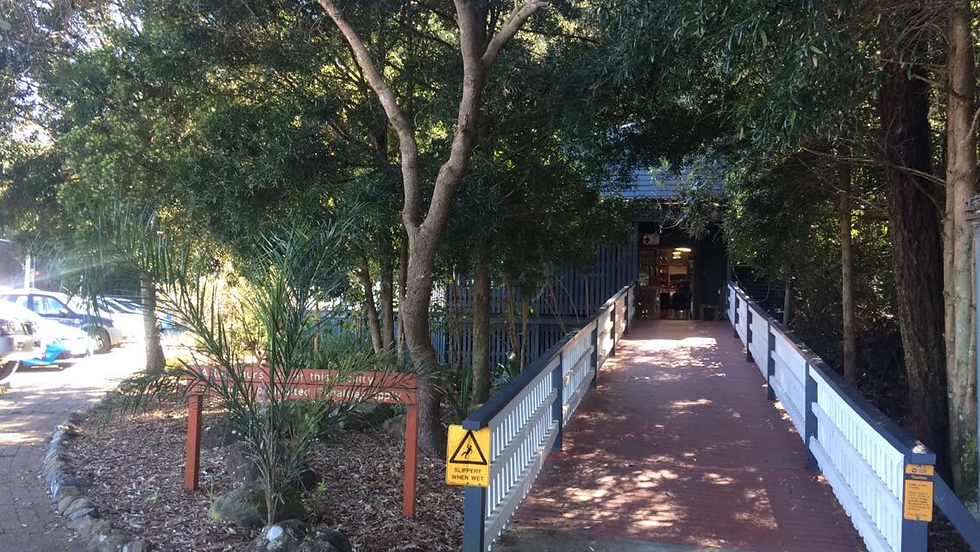
As the title suggests, I have always wondered why Aboriginal People are so important in environmental planning when they are human beings just like everyone else. Before going to the workshops and the Aboriginal sites, environmental planning in my mind was about the biophysical environment such as air and plants. Being new to the concept of Aboriginal People, as there was nothing about that in my home country, it was good that I would have a new perspective and understanding about Aboriginal People and issues while learning them for my studies and future careers. This reflection describes my views and the changes of my thinking after the workshops and field trips to Kombumerri Park, Jebbribillum Bora, and Jellurgal Aboriginal Cultural Centre.
Aboriginal People and issues to environmental planning
Aboriginal People and issues are a key component of environmental planning. The first reason is that Aboriginal People are part of the Australian community. Aboriginal People take up 3% of the total population in Australia (Australian Bureau of Statistics 2013), so they should not be ignored when we plan.
Before going to the workshops, I really thought that environmental planning was simply a subject that we planned the development by meeting the environmental protection such as reducing pollution. However, environmental planning is to manage our environment to interact with the biophysical environment (Armitage 1995; Slocombe 1993) and to adapt and transform built environments to make them more viable over the longer-term (Byrne, Dodson & Sipe 2014). Additionally, land does not belong to us, but we belong to land (Lauchblock100 2011). That said, when environmental planners plan, the Aboriginal People should be involved.
Another reason is that ‘Aboriginal People have the oldest living culture on the Earth (Flood 2006, p.133)’. Understanding that can help environmental planning as it is about society, psychology, spirits, economy and politics (Wensing 2014). Having a field trip to Jellurgal Aboriginal Cultural Centre, I learnt that Aboriginal People had a broad understanding of the environment like the habits, waters, and animals. The culture of Aboriginal People could also be seen in the centre like the boomerang and the arts which told stories. After the field trip to Jellurgal Cultural Centre and learning Aboriginal People, I realised that Aboriginal People really had a strong connection with the land. Due to the linkage between the land and Aboriginal People and issues, they would be essential in environmental planning.
To engage Aboriginal communities in better ways
It is crucial to engage Aboriginal communities when we plan. To do so, we should first understand and respect the Aboriginal cultures, and then try not to invade their privacy while saying the truth, making actual promises and building on Aboriginal traditions (Mitchell & Walsh 2002). Wensing (2014, p. 16) argues that ‘it is always important to negotiate and develop a set of protocols and procedures for accommodating Aboriginal People and interests in environmental planning and assessment processes’.
I learnt more about its importance during the field trips. I went to Jebbribillum Bora and the one located in Minjungbal Aboriginal Cultural Centre, which was a mistake as the GPS was not able to locate the one we were supposed to go.
The Jebbribillum Bora is located near roads and is like a recreational park in the urban area while the one in Minjungbal Aboriginal Cultural Centre is located in a woodland surrounded by trees a bit far away from the urban area. I could see a lot of wooden furniture which formed a ring in both sites. According to Marshall and Scott (2012), Aboriginal People used to dance in the ring while it was the meeting place for ceremonies like initiations. Therefore, I tried to interpret this meeting place into environmental planning and I thought that the main idea here was “meeting”.
Meeting could be in many ways. Negotiation with Aboriginal People as an environmental planner is one example. These places have taught me that when we try to engage anyone, we should first step into their worlds, understand their thinking and cultures. It is a way to show respects and to tell Aboriginal People that we are willing to listen to them so that we can do better in environmental planning.
Lessons from Aboriginal People to environmental planners
Planners plan for the future. Environmental planners need to protect the environment and bring about the desired future. Learning from the Aboriginal culture can help us to plan as they have known the relationship and interaction between land and people for millennia (Wensing 2014). Unlike Western scientific system, which places humanity apart from the natural world, Aboriginal culture brings human beings into nature.
Sometimes, I would ask myself what we can do to preserve a culture. The visit to Kombumerri Park was a good experience to let me reflect on this question. It is a recreational park located near residential areas and the living environment is great nearby. It is a place where 200 skeletons of the Kombumerri People were buried. It keeps the spirit of the Kombumerri People in the park while providing nearby residents with a place to relax.
I think that it is a good planning strategy as it shows respect for Aboriginal People by preserving and conserving their culture while providing recreational space for society. Knowing that Aboriginal People are inextricably interwoven with the country and land, Aboriginal People have taught us that we should consider the environment and people, who belong to the land, when we plan. Aboriginal People have also taught us not to take more than we need and respect everything around us (Wensing 2014). It is similar to sustainable development where we enjoy our resources while not stopping our next generations from enjoying theirs. As Aboriginal People and issues do not just appear in Australia but in the whole world, environmental planners should have a broadened sight in the future on the Earth. Think globally, act locally. I think that we should have good planning for Aboriginal People and issues in Australia first and then across the globe.
We should as we have to
It is worth considering Aboriginal People in environmental planning, because not only they are the origins of this land, but also their knowledge is helping us to plan. Planning is for the future and for everyone, so no one should be excluded from planning. From nothing, I had a new idea about them after attending the workshops and going to the field trips.
People that travel far know much. I truly feel that the field trips have allowed me to understand how Aboriginal People are important and why we should engage them in environmental planning. I believe that the conservation of Aboriginal culture is going to improve and be a lot better in the future.
References
Armitage, D. 1995, ‘An integrative methodological framework for sustainable environmental planning and management’. Environmental Management, vol. 19, no. 4, pp. 469-79.
Australian Bureau of Statistics 2013, Estimates of Aboriginal and Torres Strait Islander Australians, June 2011, cat. no. 3238.0.55.001, ABS, Canberra, viewed 11 August 2016, via AusStats database.
Byrne, J., Dodson, J. & Sipe N. 2014, ‘What is environmental planning?’, in Australian Environmental Planning: Challenges and Future Prospects, eds. J. Byrne, N. Sipe & J. Dodson, Routledge, Abingdon, Oxon, pp. 3-8.
‘Caring for country in action’ 2011, Lauchblock100, video, viewed 11 August 2016, <https://www.youtube.com/watch?v=huE6m084uIU>.
Flood, J. 2006, The Original Australians. Story of the Aboriginal People, Allen & Unwin, Sydney.
Mitchell, P. & Walsh, F. 2002, Planning for Country, IAD Press, Alice Springs.
'Secret tribal men's business' 2012, Marshall, C. & Scott, P., podcast, 26 October, Australian Broadcasting Corporation, accessed 12 August 2016, <http://www.abc.net.au/local/audio/2012/05/25/3619170.htm>.
Slocombe, D. S. 1993, 'Environment planning, ecosystem science, and ecosystem approaches for integrating environment and development’, Environmental Management, vol 17, no. 3, pp. 289-303.
Wensing, E. 2014, ‘Aboriginal and Torres Strait Islander people's relationships to 'Country'’, in Australian Environmental Planning: Challenges and Future Prospects, eds. J. Byrne, N. Sipe & J. Dodson, Routledge, Abingdon, Oxon, pp. 9-20.


Comments